









Cut-Resistant Coated Gloves: How to Choose the Right Model Based on Your Needs
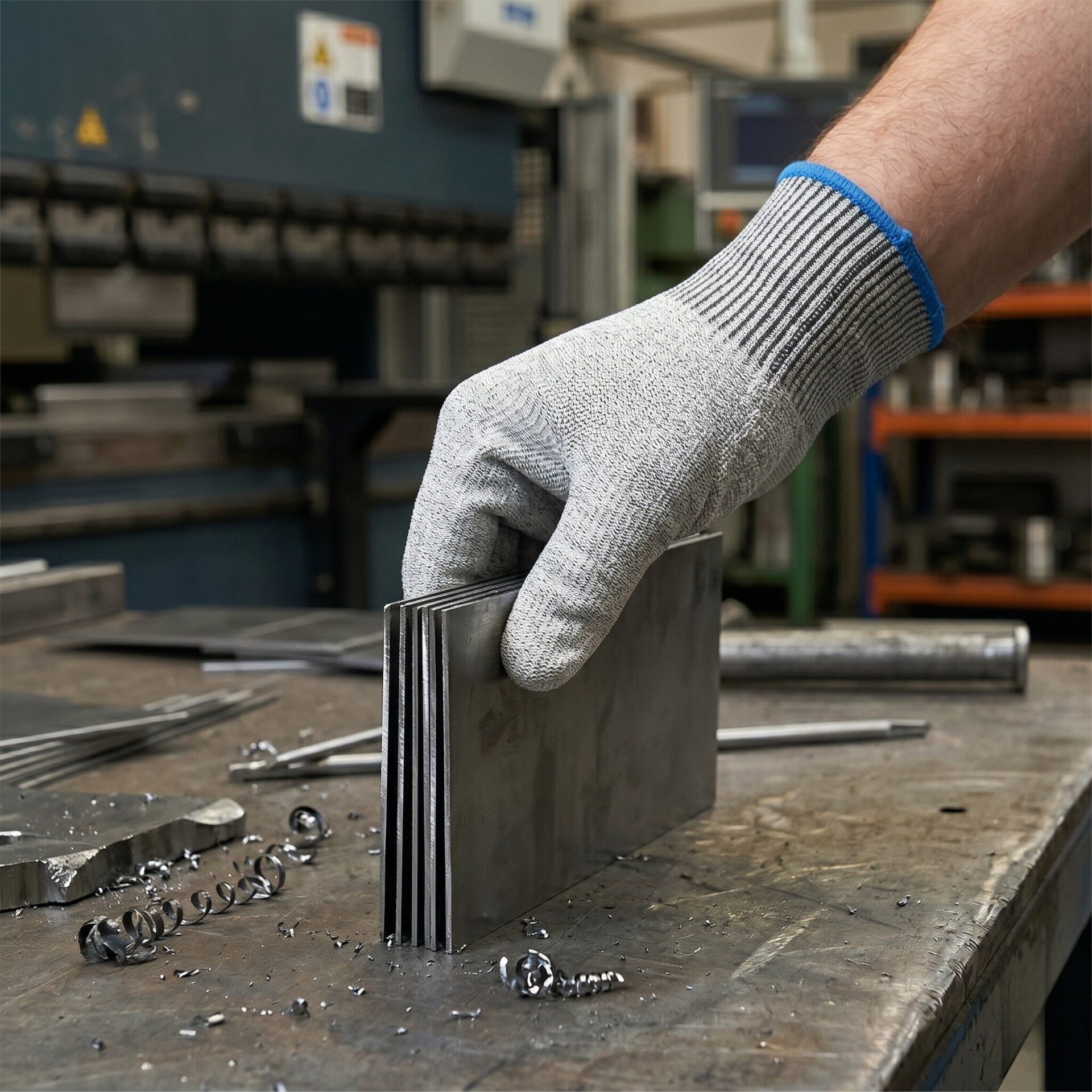
Working in environments where blades, sharp edges, or abrasive materials are present exposes workers to significant hand injury risks. In these situations, using certified cut-resistant gloves is not only recommended but essential for ensuring protection, maintaining operational efficiency, and reducing workplace injuries.
Coated cut-resistant gloves are now among the most effective solutions for combining mechanical resistance, comfort, and dexterity. They are suitable for a wide range of applications, including industry, logistics, maintenance, and mechanical engineering.
Standards and Certifications: What Makes a Cut-Resistant Glove Reliable?
To provide effective protection, a cut-resistant glove must comply with specific European safety standards. The main reference is Regulation (EU) 2016/425, which governs Category II Personal Protective Equipment (PPE).
This regulation is supported by key technical standards, including:
- EN ISO 21420, which defines the general requirements for glove safety, comfort, ergonomics, and harmlessness;
- EN 388, the standard covering protection against mechanical risks such as abrasion, cutting, tearing, and puncture;
- EN 407, which specifies protection against heat and thermal hazards in dedicated applications.
These certifications confirm that the glove has been tested according to rigorous criteria and is suitable for use in professional working environments.
Understanding Cut Resistance Levels
One of the most important factors when selecting a cut-resistant glove is understanding its level of protection.
The EN 388 standard provides two main methods for assessing cut resistance:
- COUP Test, which measures cut resistance using a rotating circular blade;
- TDM Test (EN ISO 13997), which measures the force required to cut through the material and classifies cut resistance on a scale from A to F.
The TDM Test is now considered the most reliable reference, as it better reflects real working conditions, particularly when handling high-performance materials. A higher protection level indicates greater resistance to cutting; however, the appropriate level should always be selected according to the specific application and associated risks.
Materials: What Really Makes the Difference Between Cut-Resistant Gloves?
The performance of a cut-resistant glove largely depends on the materials used, both in the glove liner and in the coating.
The main liner materials include:
- Polyamide/Nylon, offering excellent durability, elasticity, and wear resistance;
- HPPE (High Performance Polyethylene), a lightweight, high-performance fibre with outstanding cut resistance.
The most common coating materials are:
- Nitrile, ideal for oily or greasy environments thanks to its excellent chemical and mechanical resistance;
- Polyurethane (PU), thinner and more flexible, making it the preferred choice for precision tasks that require superior tactile sensitivity.
Selecting the right material has a direct impact on comfort, durability, grip, and the glove’s suitability for specific applications.
How to Choose the Right Cut-Resistant Glove
Selecting the right cut-resistant glove means carefully assessing the specific working environment and application.
Key factors to consider include:
- Type of task: Heavy-duty applications require greater mechanical resistance, while precision work demands enhanced dexterity and tactile sensitivity.
- Working environment: The presence of oils or liquids generally calls for a nitrile coating, whereas dry environments are better suited to polyurethane (PU).
- Level of risk: The higher the exposure to cutting hazards, the higher the level of cut protection required.
- Comfort and durability: Prolonged use requires breathable, flexible materials that ensure lasting comfort throughout the working day.
Choosing the right glove not only improves worker safety but also enhances productivity and operational efficiency.
The New VAM Cut-Resistant Gloves: Solutions for Every Application
The VAM range introduces a complete selection of coated cut-resistant gloves, developed to meet the requirements of a wide variety of professional applications.
For light-duty tasks and precision work, models such as VAM CUT MIX provide excellent comfort, breathability, and grip while maintaining a high level of dexterity.
For more demanding applications, VAM D CUT MIX and VAM D CUT N MIX offer the ideal balance between abrasion resistance and cut protection, with different coating options to suit both dry environments and more challenging working conditions.
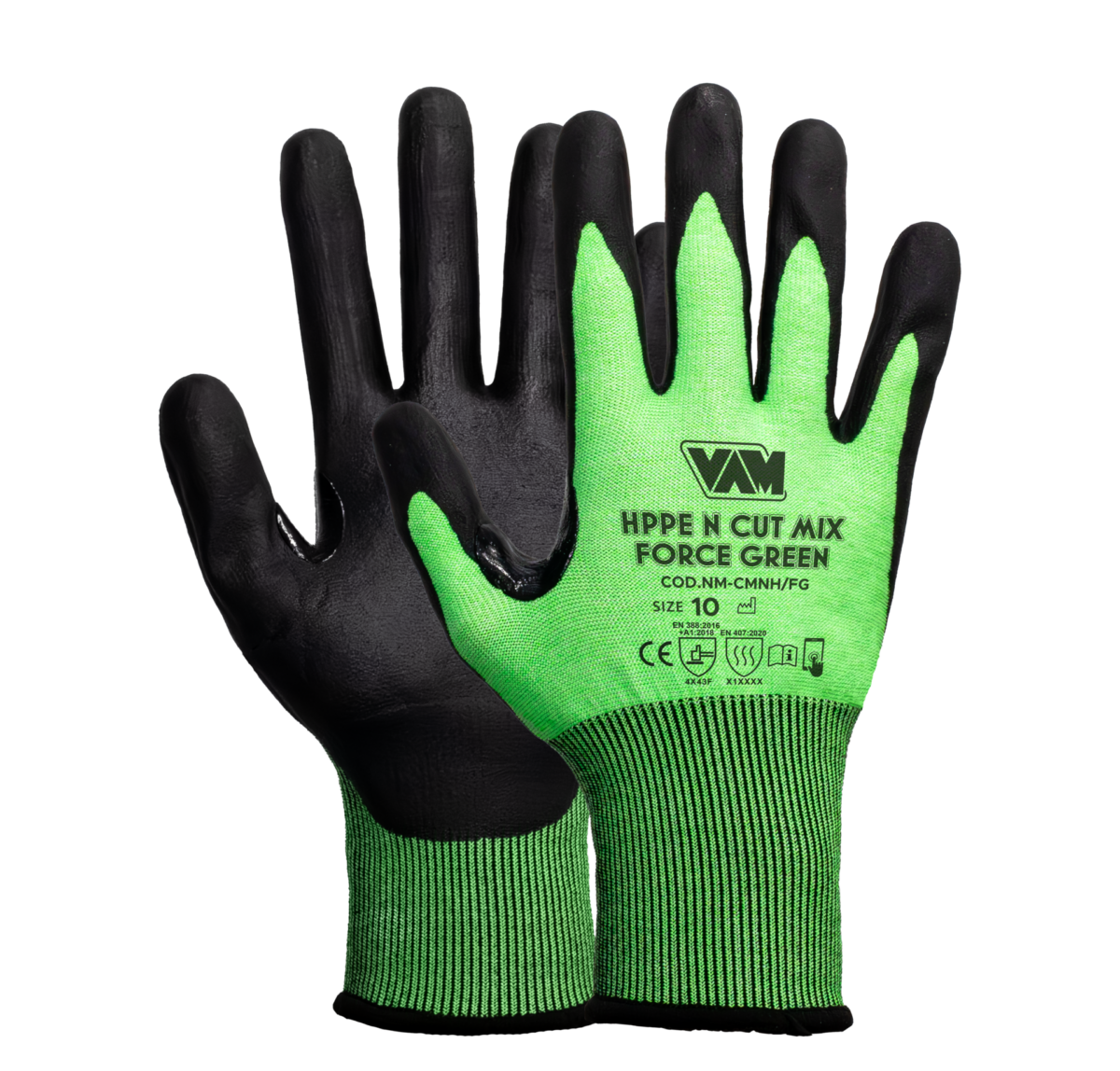
Where the risk of cuts is higher, HPPE-based solutions such as VAM HPPE CUT MIX FORCE, VAM HPPE N CUT MIX FORCE, and VAM HPPE N CUT MIX FORCE GREEN deliver outstanding cut resistance without compromising comfort or flexibility.
For even more demanding environments, particularly where oils and grease are present, OIL & CUT SAFE FULLY MIX FORCE provides an advanced technical solution thanks to its full coating, which ensures liquid resistance and maximum protection.
Why Choose VAM
Choosing a VAM cut-resistant glove means relying on a range specifically developed to meet the real demands of everyday professional work.
The combination of high-performance materials, European certifications, and application-specific solutions makes it easy to select the most suitable glove for every task, improving safety, comfort, and operational efficiency.
VAM is therefore a trusted partner for professionals seeking reliable work gloves designed to perform effectively even in the most demanding working environments.
Discover the New VAM Cut-Resistant Gloves Range


CUT MIX

D CUT MIX

D CUT N MIX

HPPE CUT MIX FORCE

HPPE N CUT MIX FORCE
